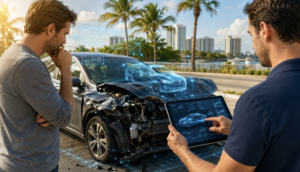
A serious car accident can turn an ordinary drive into a complicated mix of insurance reports, repair estimates, vehicle records, photographs, databases, and financial calculations. The driver may see a damaged vehicle sitting in a tow yard, while the insurance company sees thousands of data points moving through a claims system.
That difference matters.
Modern insurers increasingly rely on artificial intelligence, computer vision, automated valuation platforms, digital estimating tools, and enormous databases of vehicle transactions. These systems can process a claim faster than a traditional inspection alone, but speed does not always guarantee that the final valuation reflects the local market or the actual condition of the vehicle.
For Florida drivers, understanding the technology behind a total-loss settlement can make the difference between accepting an inaccurate offer and identifying information that deserves a closer review. Anyone dealing with a Total Loss Florida claim should know how insurers collect data, calculate value, estimate damage, and decide whether a vehicle will be repaired or declared a total loss. 🚗
The Total-Loss Decision Begins With Data
A vehicle does not have to be crushed beyond recognition to be considered a total loss. In insurance terminology, a total loss generally occurs when repairing damaged property is no longer economically practical compared with its insured or market value.
The process usually begins after the owner reports the accident. The insurance company collects the vehicle identification number, year, make, model, trim level, mileage, accident description, photographs, police report information, repair estimates, policy details, and prior claim history. Some systems may also review title records, maintenance information, equipment packages, regional sales activity, and historical auction data.
This information is entered into a claims platform that may connect with several third-party databases. Instead of relying entirely on one adjuster’s opinion, the insurer can use software to compare the damaged vehicle with thousands of other vehicles.
The technology may appear objective because it produces precise numbers. A settlement of $18,247 looks carefully calculated, but that amount is only as reliable as the data and assumptions used to produce it. Incorrect mileage, missing options, an inaccurate trim level, or poorly selected comparable vehicles can affect the final result.
How Artificial Intelligence Reads Vehicle Damage
One of the most significant changes in automobile insurance is the growth of photo-based estimating. Many insurers now allow drivers to upload accident photographs through a mobile application rather than waiting for an adjuster to inspect the vehicle in person.
Artificial intelligence can analyze those images using computer vision. According to IBM’s explanation of AI in insurance, insurers can use artificial intelligence and automation to support claims processing, payment calculations, document review, and other insurance operations.
A computer-vision system may identify visible damage to a bumper, quarter panel, hood, headlight, door, wheel, windshield, or roof. It can classify the apparent severity of the damage and compare the images with previously processed claims. The system may then recommend likely repair procedures, replacement parts, labor hours, and associated costs.
This can make the early stages of a claim much faster. A driver can submit photographs within minutes, and the insurer may generate a preliminary estimate before the vehicle reaches a repair facility.
The limitation is that a photograph captures only what can be seen. Hidden frame damage, suspension problems, damaged sensors, wiring issues, battery damage, water intrusion, and mechanical problems may not be visible in the original images. A preliminary digital estimate may increase after a repair shop dismantles the vehicle and discovers additional damage.
Those supplemental costs can push the claim closer to the total-loss threshold.
Modern Cars Are Expensive Computers on Wheels
A relatively modest collision can cause surprisingly expensive damage because modern vehicles contain far more technology than older cars. Cameras, radar units, proximity sensors, adaptive headlights, electronic control modules, advanced airbag systems, infotainment equipment, and driver-assistance features may all be located near common impact areas.
A bumper is no longer always a simple piece of painted material. It may contain sensors used for blind-spot monitoring, parking assistance, automatic emergency braking, and adaptive cruise control. Replacing the visible part may also require diagnostic scans, electronic calibration, alignment procedures, and road testing.
The National Highway Traffic Safety Administration explains that event data recorders can capture information related to a vehicle crash. Depending on the vehicle and circumstances, electronic crash information may help investigators and insurers understand factors such as speed, braking, seat-belt use, and airbag deployment.
Technology can therefore contribute to both sides of the claim. It can provide valuable crash information, while also making the damaged vehicle considerably more expensive to repair.
An insurer may determine that replacement is financially safer than authorizing repairs involving uncertain electronics, extensive recalibration, delayed parts, and the possibility of additional hidden damage.
How Insurance Valuation Software Calculates Actual Cash Value
Once the repair estimate reaches a certain level, the insurer calculates the vehicle’s pre-accident actual cash value. This is intended to represent what the vehicle was worth immediately before the loss, rather than what the owner originally paid or currently owes on a loan.
The valuation system normally starts with the vehicle identification number. That number helps decode the manufacturer, model year, engine, body type, and certain factory specifications. The platform may then consider mileage, trim, equipment, condition, geographic location, and recent market activity.
Comparable vehicles play a major role. The software searches for similar vehicles listed or sold within a selected geographic area. Adjustments may be applied when a comparable has different mileage, equipment, condition, or features.
The final report may look thorough, but several details deserve attention. A comparable vehicle located far from the owner’s market may not reflect local prices. A vehicle advertised online may already have been sold, may include dealer incentives, or may represent a different trim package. Generic condition deductions can also lower a valuation when the owner’s vehicle was properly maintained.
The Florida Department of Financial Services provides a personal automobile insurance overview explaining that Florida law does not establish one fixed repair-cost percentage that automatically determines when every vehicle must be declared a total loss. The specific facts of the claim, the policy, the vehicle’s value, repair expenses, and applicable title requirements all play a role.
Florida Law Shapes the Settlement Process
Technology may perform much of the calculation, but insurance software does not replace Florida law.
Florida Statute 626.9743 addresses motor vehicle insurance claim settlements. When a first-party total loss is settled using actual cash value or replacement with a vehicle of like kind and quality, the statute identifies methods insurers may use to determine the settlement. These methods include a cash settlement based on the cost of purchasing a comparable vehicle and certain recognized valuation resources or databases.
Florida title laws also affect what happens after a vehicle is totaled. The Florida Department of Highway Safety and Motor Vehicles’ total-loss procedure describes requirements involving insurance companies, salvage titles, certificates of destruction, ownership documents, and vehicles retained by their owners.
These rules matter because a total-loss decision affects more than the insurance payment. It can change the vehicle’s title status, resale value, insurability, and ability to return legally to the road.
A driver who keeps the damaged vehicle may face additional title, inspection, repair, and registration requirements. The projected salvage value may also be deducted from the settlement.
Artificial Intelligence Can Be Fast Without Being Infallible
Insurance companies have legitimate reasons to use automated systems. Digital claims platforms can reduce processing time, organize large volumes of information, detect inconsistencies, and allow adjusters to handle more claims.
Artificial intelligence can also help identify fraud. Systems may flag duplicate photographs, altered images, inconsistent accident descriptions, unusual repair patterns, suspicious documents, or claims connected to previously reported damage.
The concern arises when automated recommendations are treated as unquestionable conclusions.
The Federal Trade Commission has warned that artificial intelligence tools can produce inaccurate, biased, or discriminatory results when their design, data, or use is flawed. Although that guidance is broader than automobile insurance, the basic lesson applies to any high-impact decision made with automated technology.
A valuation system does not personally know that a vehicle was garage-kept, recently serviced, fitted with an uncommon factory package, or located in an area where similar vehicles command higher prices. It recognizes only the information available to it.
Missing information can therefore become lost value.
AI Oversight Is Becoming Part of Insurance Regulation
Insurance regulators are paying increasing attention to the way companies use artificial intelligence. The National Association of Insurance Commissioners has developed principles and guidance concerning insurer use of AI systems. Its model bulletin focuses on governance, risk management, testing, documentation, and compliance with insurance laws.
The central idea is straightforward. An insurance company remains responsible for its decisions even when software, algorithms, vendors, or predictive models assist with those decisions.
Automated systems should not become a barrier between the consumer and the evidence supporting a valuation. Drivers should be able to review the vehicle description, comparable automobiles, mileage, options, condition adjustments, taxes, fees, deductions, and other components used to calculate the settlement.
Human review remains important, especially when a vehicle is unusual or the market data is limited. Classic vehicles, customized automobiles, low-mileage cars, commercial vehicles, luxury models, rare trim packages, and exceptionally well-maintained vehicles can be difficult to value accurately through standardized databases.
The Comparable Vehicles Can Change the Entire Offer
Comparable vehicles are often the most important section of a total-loss valuation report. A small difference between the damaged car and the selected comparables can produce a meaningful difference in the settlement.
The owner should verify that each comparable has the same model year, trim level, engine, drivetrain, body style, and major equipment. Mileage adjustments should make sense. The listed dealership should exist, and the vehicle should have been available during a relevant period.
Condition adjustments also deserve careful review. Some reports apply deductions for the interior, exterior, tires, or mechanical condition. Those deductions may be based on assumptions rather than a detailed pre-accident inspection.
Maintenance records, photographs taken before the collision, recent service receipts, tire invoices, window stickers, build sheets, and dealer listings can help establish the vehicle’s actual condition and configuration.
Recent repairs do not always increase market value dollar for dollar. A new transmission costing several thousand dollars does not necessarily add that same amount to the settlement. The documentation can still demonstrate that the vehicle was operational, maintained, and in stronger condition than an average example.
Independent Appraisals Add Human Context to Digital Valuations
An independent vehicle appraisal can provide a second analysis when the insurance company’s valuation appears incomplete or inaccurate. The appraiser can review the insurer’s report, inspect the vehicle, research the local market, identify equipment, evaluate condition, and locate more appropriate comparable vehicles.
This does not require ignoring technology. A strong independent appraisal often uses technology alongside professional judgment. Online listings, market databases, title records, vehicle-history information, manufacturer specifications, and local sales research can all support the analysis.
The difference is that the appraiser is not limited to accepting the original software output. The appraiser can explain why a comparable is unsuitable, why a deduction lacks support, or why a particular feature affects market value.
Insurance technology works best when it organizes evidence rather than replacing critical review.
Digital Claims Will Continue to Expand
The future of automobile claims will include more automation, not less. Mobile applications will collect accident information at the scene. Connected vehicles may transmit diagnostic data. Artificial intelligence will identify damaged components, estimate repairs, check policy provisions, screen for fraud, predict supplemental costs, and calculate potential settlement ranges.
Some claims may move from accident report to payment with very little manual processing.
That efficiency can benefit drivers when the information is complete and the outcome is accurate. It can reduce delays, simplify communication, and help people receive payment sooner.
The same technology can create problems when an incorrect data point moves through the system without meaningful review. One wrong trim designation, mileage entry, condition adjustment, or comparable vehicle can influence every calculation that follows.
A polished digital report should therefore be treated as documented analysis, not unquestionable proof.
Conclusion
Artificial intelligence has changed the way insurance companies evaluate damaged vehicles. Photographs can be analyzed in seconds, repair costs can be predicted from historical claims, and comparable vehicles can be pulled from large databases almost instantly.
Those tools are powerful, but they do not eliminate the need for accurate records, appropriate market comparisons, legal compliance, and human judgment.
Florida drivers should review the complete valuation report rather than focusing only on the final number. The vehicle description, mileage, options, condition, comparable vehicles, taxes, fees, repair costs, and salvage deductions all contribute to the settlement.
The most important fact is that technology does not personally know the vehicle. It knows the data attached to the claim. When that data is incomplete or inaccurate, the resulting offer may also be incomplete or inaccurate.
A fair settlement begins with reliable information, careful documentation, and a willingness to examine how the number was created. In a claims system increasingly powered by algorithms, informed human review remains one of the strongest forms of protection. 🛡️
